
The blooms in the back garden, neglected for most of a decade before I bought this old house, emerge as the season shifts toward autumn. Old fashioned cabbage roses, phlox, and delicate Japanese anemones struggle to poke their heads through the weeds and scent my rooms with memories of Maine. Mornings in the garden, hand snugged in my great-grandfather’s, the chatter of birds and clatter of cooking in the kitchen. The sounds and scents of love.
About Ruminations
As a journalist and academic, I have spent my life writing. First I wrote about other people: their jobs, their hobbies, their suffering and loss, and the joys they wanted to broadcast for all to hear. Then I wrote long, dense, endlessly annotated articles about the law and the courts and the system of so-called justice in these United States. After I lost hope in both the media and the judiciary as platforms for truth and fairness, I worked with others around the world on new ways to achieve peace and justice. I wrote about that, too.
I continue that work here, though not through academic journals or letters to the editor, which seem painfully inadequate to touch and move people when movement is essential to the transformative change we need in today’s fractured and fractious world. I now pursue my efforts toward greater equity and freedom for us all by sharing with you here my personal ponderings and reflections about life, love, loss, and liberation, about family, friends, and fear, and about the misogyny that has colored my life.
I am fortunate and privileged to sit here in my office in my own home in my own private corner of Washington state. My life has benefitted from the inequality–of money, ethnicity, and race, primarily, but other types, too–that I rail and struggle against, and I am often deeply dissatisfied by my inability to do more. It is not in me to be a frontline activist. I do not march with the protesters facing down the police or lay myself in front of bulldozers despoiling old-growth forests. Instead I send words and what donations I can out to support and invigorate the others who do the hard work, the “real” work, the work that costs them jobs and friends and their own freedom. Sometimes their lives.
Sometimes I wish I were other, but I do what I can and hope it is sufficient to help someone somewhere even just for a moment. I hope my writing brings you something of value. Namaste.
Newest Study Still Fails to Examine the Effects of Psychiatric Drugs on Women

One in nine adults in the United States takes antidepressants, and women make up two-thirds of that group. Yet a meta-analysis of 151 antidepressant drug trials published in Lancet on Oct. 21 makes clear that maybe they shouldn’t be.
The analysis of 30 different drug trials and almost 60,000 individuals found that both the psychological benefits and the physiological side-effects of antidepressant drugs vary enormously. While antidepressants benefit most patients diagnosed with schizophrenia, their effects on depression are not clear. Additionally, some of the drugs may harm the heart by causing increased heart rates and blood pressure, weight gain, and higher glucose and cholesterol levels.
A great deal remains unknown. While the vast majority (88.7%) of the trials analyzed collected gender data on the subjects, the results were not analyzed for potential differences by gender. This despite the fact that repeated studies and patient surveys report that women, especially non-Hispanic white women, are more than twice as likely as men to take antidepressants. One 2023 CDC study concluded that the gender difference in taking antidepressants matters, statistically. Gender likely affects outcomes. Yet the CDC did not examine how the drugs might affect women differently from men.
I don’t see this as anything new, and I am not alone. An increasing number of nonfiction books, including memoirs, challenge the assumption that psychiatric drugs improve the lives of patients, especially women. My knowledge is gleaned both from independent research and a lifetime of trying to figure out whether my suicidal mother was crazy or broken by the brutal psychiatric treatments she received in the name of medical care. Yet many more objective observers also question whether psychiatric drugs weren’t designed to silence those who challenge accepted norms, as their Holocaust origins might suggest.
If you’d like a truly expert opinion on this, I direct you to Dr. Jessica Taylor. She publishes widely on the overmedication of trauma and the psychiatric demonization of women.
Recent Sources:
Elgaddal, Nazik, Weeks, J.D., and Mykyta, Laryssa. Characteristics of Adults Age 18 and Older Who Took Prescription Medication for Depression: United States, 2023. NCHS Data Brief No. 528, April 2025, at https://www.cdc.gov/nchs/products/databriefs/db528.htm.
Older Women Use the Most Antidepressants, Survey Finds. Women’s Healthcare, Jan. 4, 2023, at npwomenshealthcare.com /older-women-use-the-most-antidepressants-survey-finds/.
Pillinger T, Arumuham A, McCutcheon RA, et al. The Effects of Antidepressants on Cardiometabolic and Other Physiological Parameters: A Systematic Review and Metwork Meta-analysis. Lancet, Oct. 21, 2025, at https://doi.org/10.1016/S0140-6736(25)01293-0.
Taylor, Jessica. Sexy But Psycho. Constable & Robinson, 2023.
The Sounds of Silence
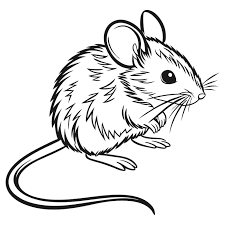
A gale whistles through the sashes and rattles the bedroom door, an unwelcome visitor. I rouse from solitary sleep. Floorboards creak above. A door slams shut. I wrap myself in felted wool and rise, quivering, to join the other women of the witching hour searching our homes.
“Not even a mouse,” I say, startling at my voice.
Image from Freepik.
Fish in the Water
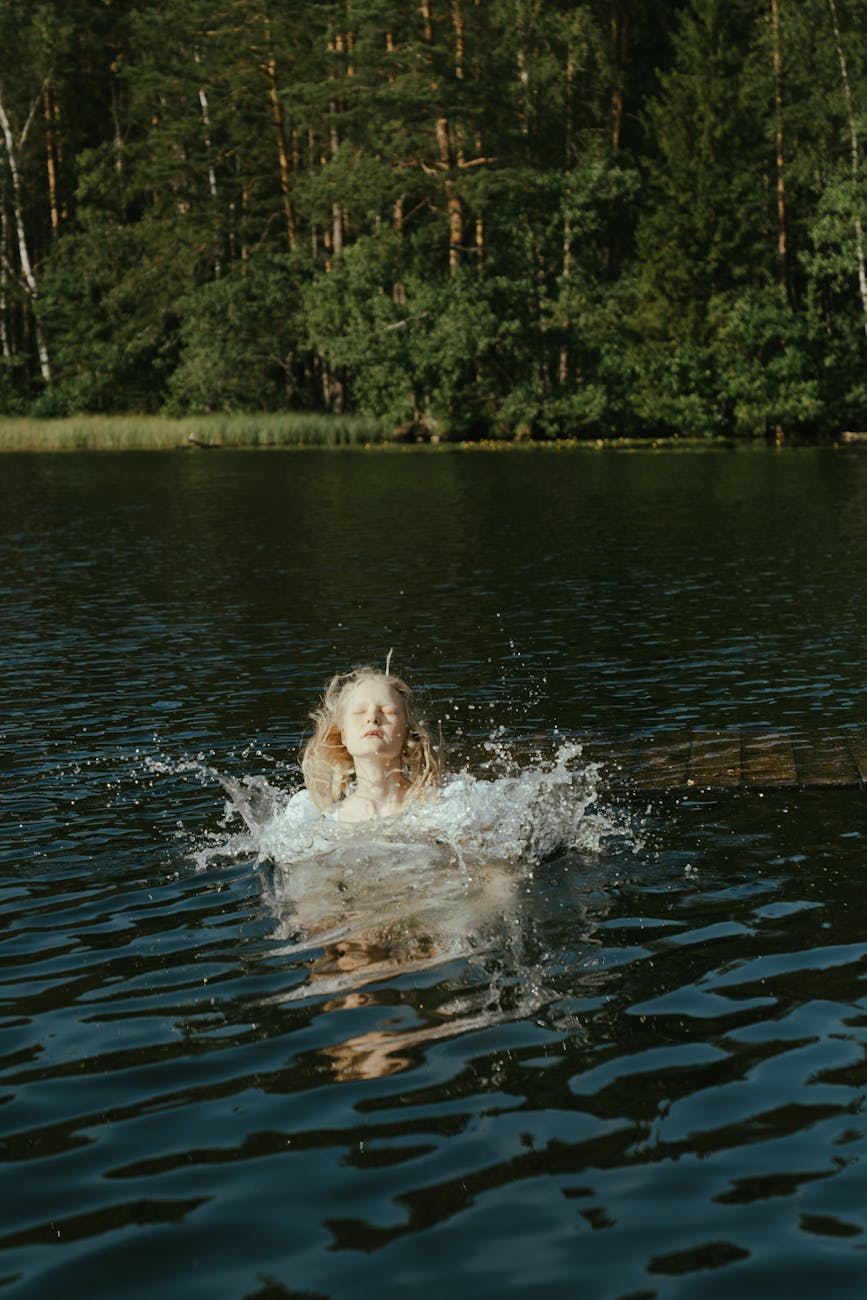
In all those seventy-three sea and lakeside summers, those long idyllic sun-filled days with fat fluffs of white sailing high to cast now-and-again shade, or those humid, hazy days when the whine of mosquitoes filled her ears and no-seem-‘ems swarmed her damp body, she never learned to swim. Not really. Not beyond a doggy paddle.
She loved that Maine’s frigid ocean allowed her to forego a plunge. No one badgered her to “at least dip your feet and splash some water to cool down a bit.” No one demanded she wade in, struggle in the briny undertow, or sink into the muck beneath. She felt no urge to join her shrieking peers who rushed into its biting swirls to emerge blue and chattering only to splash back again and again. She sat stoic and silent amid the bugs, splattering her pages with their smashed bodies as she read. Or she watched the Atlantic glisten and whisper across the stony beach and dash itself into froth around the boulders to leave crusts along the shoreline.
Perhaps it was because of her season of summer camp, when her parents left her despite the whooping cough. That summer she was seven, and the counselors forced her to swim every day among the five-year-olds, the youngest campers, the ones everyone except her called the babies. Most swam no better than she, and they made fun of her, these babies. They called her “scaredy cat” because she refused to put her face in the water. She flailed and splashed, holding her head rigidly above the water line but failing to keep water out of her eyes. They followed her back to the cabins, stumbling, jerking their arms about and laughing, calling her “the spaz.”
She hated them. She hated camp.
She never learned to swim any better, not ever.
Image by Pixels.
Good News
For those seeking insights into my unpublished memoir, This Bed We Made Me, I invite you to look to two online magazines containing my essays. First, Mad in America has posted “Something Broken” for Mother’s Day. And Marrow Magazine #13 will be sharing my essay “A Lucky One” later this month. Both deal with sensitive subjects that may trigger some folks, but for those wanting insight into mental illness and abortion in a land of misogyny and control of women’s bodies, I invite you to read them.
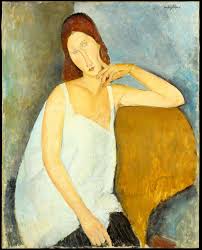
Image: Modigliani’s Jeanne Hébuterne, creative commons
On the Road
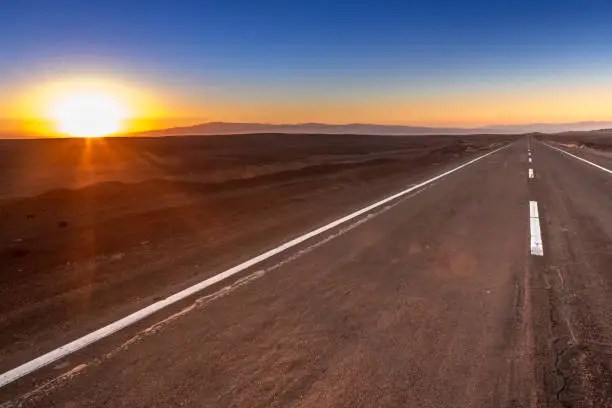
During a road trip the other day, a friend helped me give voice to the vision I think could create a real choice in politics. Here’s the kernel: We on the left need to craft our own emotionally compelling narrative that acknowledges the real pain of falling behind and not providing what we had hoped to for our children.
We are the 98%, the true working class that keeps America going. We suffer from wages that don’t keep pace with the cost of living, education that leaves our children unemployed, medical care that is inaccessible, religion that doesn’t salve our wounds and tells us to harm others …
Poverty is not urban and Black or rural and White. It is everywhere. In the big homes where folks rely on food banks and juggle bills and the encampments of our exploding unhoused neighbors: doctors, teachers, and the chronically ill or unemployed. The struggle to make do and get by is the shared experience of this country. Suffering is not determined by race, education level, or where we live. It is the reality of those of us who work hard and produce wealth that benefits the bosses, the owners, the wealthy.
We need to tell the story that the poor in the U.S. are all of our essential workers who kept on throughout quarantine. Yes. But our poor are also our underpaid skilled or professional workers in offices, factories, universities, schools. Our self-employed and our salaried teachers and aides and nurses and builders who put in long hours but get no overtime.
We who do not agree with GOP/MAGA doctrine can’t keep running from immigration and guns.
I’m hard-pressed to say something sensible about the guns that have turned this nation into a slaughterhouse of children and a war zone. But we need to remind ourselves that the myth of a Wild West may have built this county, but the story of this nation is one of immigrants and immigration. 98% of us are only a generation or three from another home in another nation. We non-indigenous folks are all immigrants, and together we feed, educate and care for this nation. We are today . . . and tomorrow.
Photo courtesy of Gratisography.
Reluctant Spring

Spring retreats. Plants stutter, deterred and broken by frigid gales that froth and rime the sea. Mangy deer in tufted coats clip infant green to bare earth. Rain pummels, flattens. Ragged clouds sweep the sky flat, obscure the light, impound the warmth. A world too mean to enter. Icy damp soaks bulky layers as I remove winter’s rubble: twigs, pine needles, branches, dried leaves, plants killed by the late hard frost or shredded by the wind.
Life persists. Dogged spring struggles on.
Author photo.
A Winter Idyll
What’s that saying about flailing against the inevitable? That’s not it. Something about going all in cuz you know it’s over.
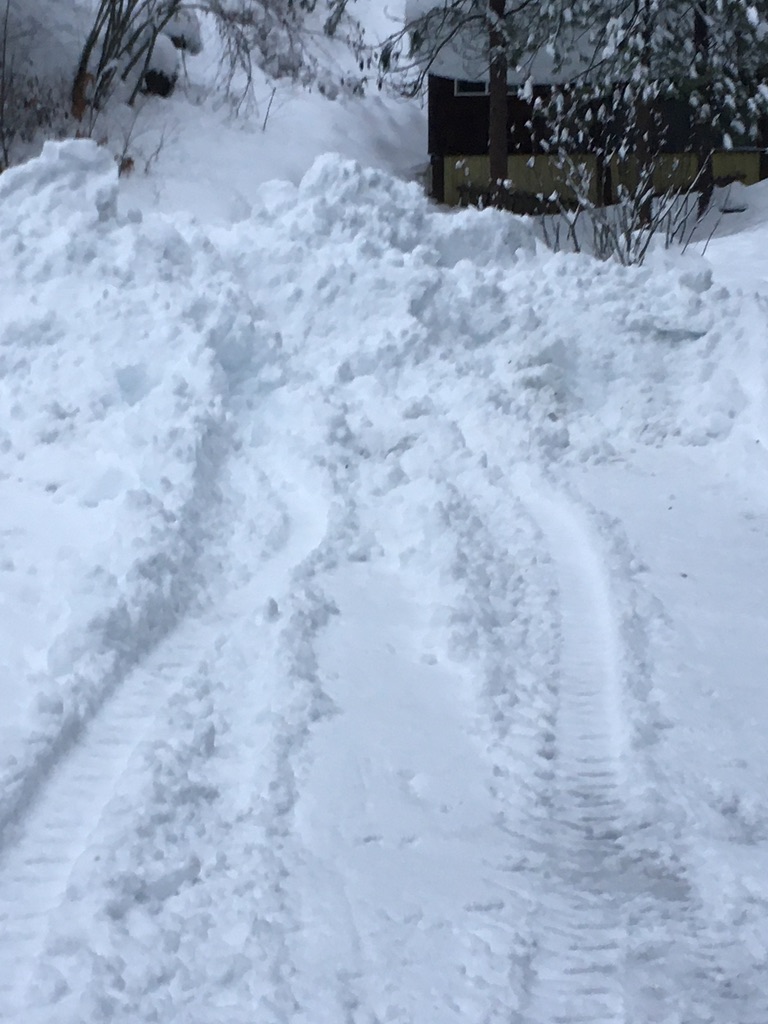
Whatever. What’s that got to do with us? We need to get the hell outta here before we can’t. The snow’s . . . What? . . . 6 inches? Let’s go.
Nope. I’m not gonna budge. I paid good money, $673.42 a night for three nights. I’m gonna get what I paid for. Nature. Quiet. Snow!
You go. Go ahead, if you want. . . . I’m making eggs. You in?
Ryan closed the door and climbed on the ATV. He left a spume trail and silence.
Image by author.
Pace in Writing
The variety said to be the spice of life is equally important in your writing. Repetition in the form and sounds of your writing can make your narrative flat and lifeless. The same structure and phrasing reviewing similar content slow writing to a standstill. Readers head for the exit.
See what I did in that paragraph. Structural and content similarity. When used well, repetition can hammer an important message home, but too often it is simply tedious.
To avoid reader departure or tedium, vary the sounds, structure, length and rhythm of your sentences. Consider sharp constrasts.
Whack!
The pumpkin split slowly, its fibrous tendrils clinging to each other as if to stitch the wound but then yawning and breaking to leach orange slime, seeds, and pumpkin guts onto her beloved beige carpet.
There are several ways to alter the “speed” of your narrative.
- The judicious use of the sound of language. Sharp crisp consonants vs longer fricatives and sibilants and short vowels vs long subtly affect the pace of the reader and the narrative. Kate hit vs Simantha slapped.
- The rhythm of words, phrases, sentences and paragraphs. Do rivers meander, rumble and froth or sit limpid? Does the sun shine or light streak?
- The number of syllables in the words, clauses and complete sentences. Longer, more complex structure and phrasing slows things down, even when the writing has the same focus. Flatulence simply lasts longer than a fart.
- The content. Encourage your language to reflect its focus. Stillness wants detailed description, a slowed gaze to observe the minute, the immobile, the fading. Fast or sudden movement invites the opposite. Think: The bubble bath drained slowly, the last of the foam sliding imperceptibly into the open drain. vs The black dog snatched the steak. Gulped it down.
To slow down, attend to scene. Use longer more complex sentences and paragraphs immersed in the scene. Provide specific, concrete details to involve the reader. Careful and intentioned use of adverbs/adjectives helps here. To accelerate, exposition and summary move the reader quickly through less essential elements. Sentence fragments, dialogue in short snippets, and single-syllable words with crisp consonants and short vowels also speed the pace.
July 2024
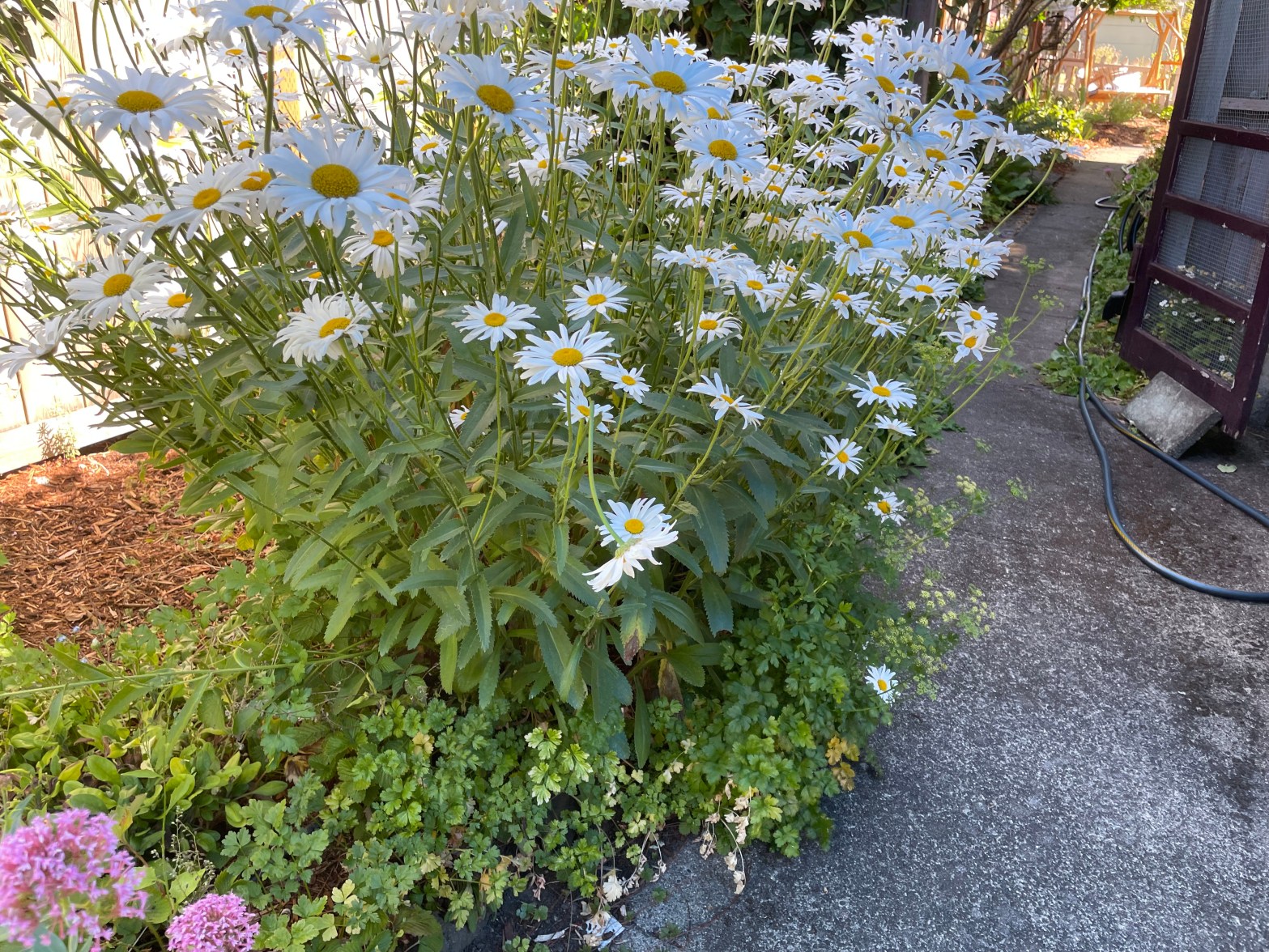
Tendrils
I yank the daisies up by their roots, spewing dirt across my toes but ending their sprawl and droop across the garden path.
A memory flashes as I trim the roots and tug the leaves from the lower stems. My great-grandfather hands three-year-old me the roses he has de-thorned one by one to keep me from pricking myself.
Each day, his wife of sixty years smiles and welcomes the bouquet.
Online coaching: “Scare Quotes”
At the request of a fellow writing coach, I posted this advice on SM about “scare quotes,” those quotation marks used here and problematically elsewhere when nothing is being quoted. I share what I pulled from my teaching archives in case you’re curious.
Use scare quotes only when essential and very sparingly even then. They do not need to be, nor should they be, used on each re-use of the key term. They interrupt the narrative flow, slow the pace of reading, and often interfere with comprehension as readers attempt to decipher their hidden meaning. Italics is an alternative method of emphasis that is slightly less problematic, but it also should be kept to a minimum.
Your goal is to facilitate reader comprehension, pace, and enjoyment. Often, that is best served by using a more precise term or, when necessary, defining the problematic phrase as soon as possible after its introduction.
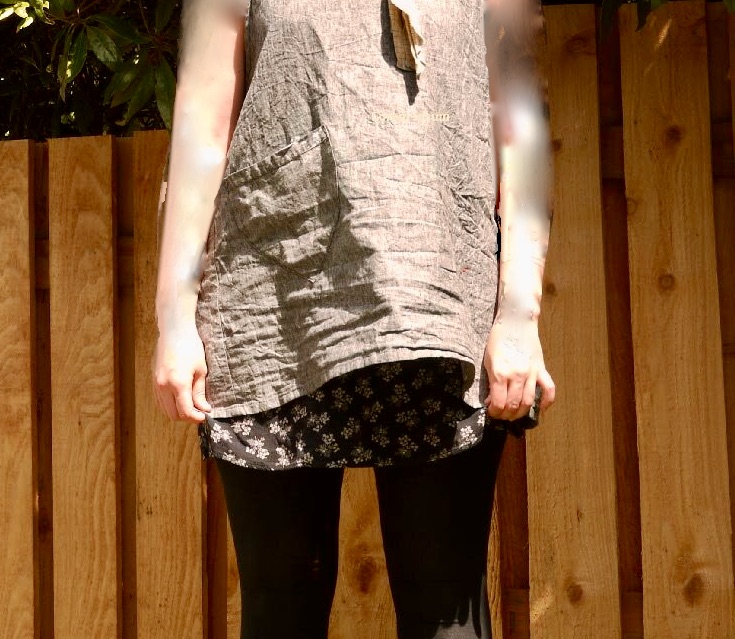
Example: Melanie wore her “dress” to the interview, as was her habit when trying to impress.
Alternative: Melanie wore her interview dress, which consisted of a crumpled tunic over faded leggings. It failed to impress.
Photo edited from SlowMotion.
 Ruminations